← InsightsIndustry trends
Automation still needs a human finish.
Templates can help teams move faster, but candidates still need a clear answer.
Kēhua Editorial
Research desk · May 2, 2026 · 6 min read
Templates can help teams move faster, but candidates still need a clear answer.
Kēhua Editorial
Research desk · May 2, 2026 · 6 min read
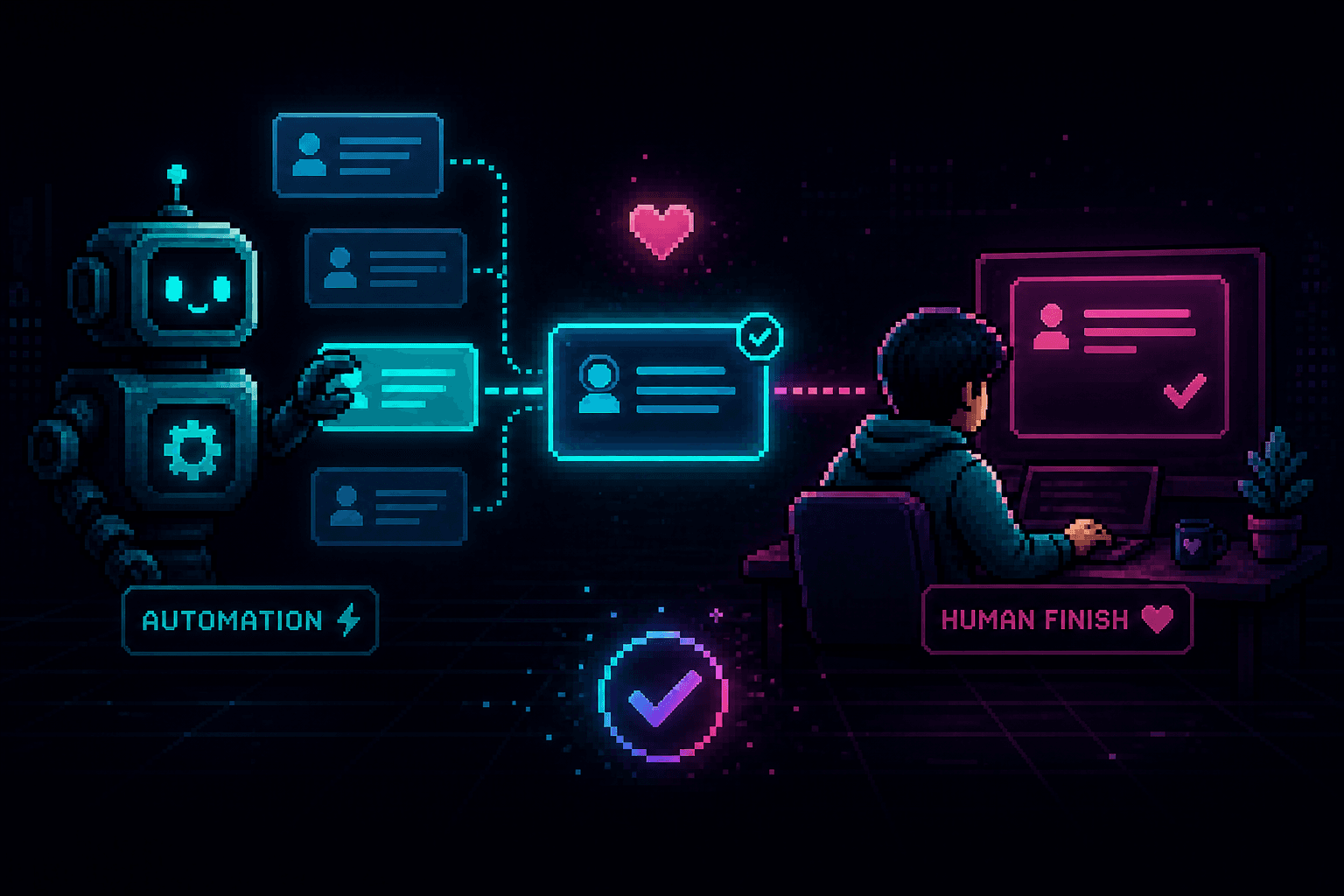
Recruitment has enthusiastically adopted automation. ATS platforms screen applications before a human reads them. Scheduling tools book interviews without a single email exchange. AI summarises notes, scores candidates, and drafts job descriptions in seconds.
None of this is inherently bad. Automation handles the repetitive work so recruiters can focus on the conversations that actually matter. The problem is what gets automated last — or not at all.
The irony of a highly automated recruitment process is that it often produces more ghosting, not less. The front end of the funnel — applications, acknowledgements, scheduling — runs smoothly. But the back end, where decisions are made and candidates need to be told what happened, is still largely manual.
Once a role is filled, the urgency evaporates. The automation stops. And the candidates who went through a slick, tech-forward process are left without a final answer.
"The application process was seamless. The interview was booked automatically. And then I heard absolutely nothing. I assumed their technology had lost me somewhere."
There is a persistent view that automated rejections feel cold — that a templated email is worse than no email at all. The data does not support this.
Candidates consistently rate a templated rejection positively when it arrives promptly and uses their name. They rate silence negatively regardless of how warm the earlier process felt. The template is not the issue. The absence of any communication is the issue.
What candidates object to is not automation — it is imprecision. An email that clearly confirms a decision has been made, thanks them by name, and leaves the door open for future roles lands well. An email that feels copy-pasted and ignores the specifics of the role they applied for does not.
The most effective approach is one that uses automation for speed and scale, but builds in a light human layer at the close.
This is not about making every rejection feel personal. It is about making sure every candidate gets a clear answer before the thread goes cold.
Recruitment automation has improved candidate experience at the top of the funnel considerably. But it has created a new expectation: if a process starts smoothly, candidates assume it will end the same way.
When it does not — when the polished onboarding ends in silence — the contrast makes the ghosting feel worse. The bar has been raised. Meeting it at the finish line is the part most teams are still working on.
Better for candidates. Better for recruiters. Better for the world of work.